If science fiction ever taught me anything, is that if you try to fix a bad event from your past, you make it ten times worse.
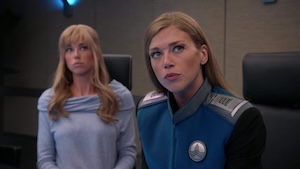
Exhibit A - Kelly Grayson, The Orville (episodes Tomorrow, and Tomorrow, and Tommorow and The road not taken)
After finding out that sometime in the future she’d cheat on her husband, past Kelly decided to stop seeing him altogether to prevent that. Unknowingly, she also prevented other events from happening - since Kelly never cheated on Mercer, she didn’t feel guilty, so she didn’t get him capitancy on Orville, so doctor Finn never requested assignment there, so Isaac never met Ty and Marcus, so the Kaylon won Battle of Earth.
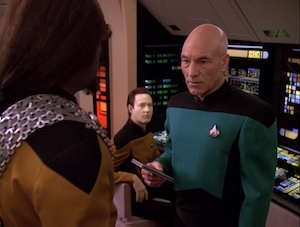
Exhibit B - Jean-Luc Picard, Star Trek: The Next Generation (episode Tapestry)
In this episode, Q gave Picard a chance to prevent one of events in his life from happening - getting stabbed in his heart, which caused Picard to need an artificial heart to survive. Convinced it wouldn’t change the future, Picard didn’t get into the bar fight. However, upon returning to the present, rather than a captain, he was one of junior science officers. By changing the event, he changed quite a bit of history - he was always playing it safe, which led to him not getting far within chain of command.
In both cases characters had to go back and fix what they’ve done so everything would go back to what it was.
It seems like moral is that no matter how bad experienced you had, current time flow is the best possible one.
Except in the stories where a time traveler comes from the future and tells the characters that a bad thing is gonna happen, and then they try to stop it.
Then the moral is usually that the time stream can and should be changed.
Or, in other words: Whether or not it’s a good thing to try and change your past? depends on whether you are the point-of-view character.
So if “Bob” goes back in time and tells “Young-Bob” not to do Thing A, that’s bad, but if “Kyle” goes back in time and tells “Young-Bob” not to do Thing A, thats good?
In either case it depends whether the story is told from the viewpoint of Young-Bob, or the viewpoint of whoever is trying to influence him
Been a while since I wrote that…. but I think what I was getting at, is that time travel stories tend to punish characters who try to change their past. (As in, “the past in relation to the time they come from.” not “change the past specifically by interacting with their past self.” That part doesn’t matter. Because, no matter how they change the past, it ends up being their past somehow or other… butterflies etc, everything’s connected)
And I think the reason for it, is that stories try to have the moral of “don’t try to change what you can’t change.” and in real life, the past is a thing you can’t change.
But meanwhile, when characters are visited by someone from their future (aka, the future in relation to the time period they are in), and that person tells them about something that’s destined to happen to them in their future?
Then, the moral of the story is, “you can totally change the future! nothing is destined!” Because that’s considered a useful lesson for living in the real world.
But in a world where time travel was possible, the only difference between the scenarios would be whose viewpoint the story’s told from.
So it’s kinda a weird medium for trying to teach those lessons.