cracking myself up thinking about the movement towards simplified forms in cave paintings
grug: grug must paint every hair on buffalo in realistic detail
thog: grug can chill out, audience know what buffalo look like. just do one line like thog
thog: cave painting world no longer look for photorealism. expression of form and movement is new frontier
grug: but then how will grug demonstrate high level of skill? grug have art degree
thog: any caveman represent buffalo as it is. grug must represent what it means to grug
grug: hm. this will challenge grug. but grug enjoy rising to occasion
TANGENT TIME
I just had a thought: the way that we (in English, at least) use simplified grammar to connote “primitiveness” - like omitting verb conjugation, articles, and pronouns (e.g. “grug have art degree” vs. “grug has an art degree” or “I have an art degree”) - is interesting to me.
Because that’s not at all how language works in the real-world. There’s no correlation whatsoever between grammatical complexity and technological advancement.
(Also it’s debatable whether there are any real-world languages that don’t have pronouns, and the ones that are sometimes said to lack pronouns tend to have grammar that’s very complex in other ways.)
For example: afaik, the Chinese languages have never had any inflectional morphology (like verb conjugation) or articles, so direct word-for-word translations into English can look a lot like stereotypical “caveman talk”. But for most of its history, China was the most technologically-advanced civilization in the world.
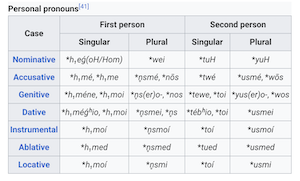
Meanwhile, the Proto-Indo-European language (spoken in the actual Stone Age by people who had barely even figured out agriculture, let alone fancy new tech like “the wheel”) had *extremely* complex grammar - far more complex than modern English. I can’t even begin to do it justice, but just skim its Wikipedia article and you’ll see what I mean.
ALT
Anyway, it just struck me as odd, the way we imagine cavemen (i.e. Stone Age humans, who mostly didn’t actually live in caves) talking with simplified grammar. Like I get it on an intuitive level - I never would’ve thought twice about it before I knew anything about historical linguistics - but now that I do, it seems weird.
(I do still appreciate the comedy potential, though; this isn’t a criticism of OP.)
Do other languages do that, or is it just an English thing? I’m curious.
“Language no longer need photorealism. Grug simplify language.”

 ALT